Dabblers do not change the world

Have we taken “well-rounded” too far? “Well-roundedness” is the new North Star of education — but are we headed in the wrong direction? Chances are, you’re familiar with the chaotic rhythms of modern-day parenting: the soccer practices, guitar lessons, art classes, gaming clubs, and jiu-jitsu tournaments that shape our Saturday afternoons. But in the classroom, “well-roundedness” goes against the grain of genuine learning. Let me explain. In a conventional classroom, breadth of learning takes precedence over depth. Mastering the material doesn’t matter; only forward progression. One day it’s photosynthesis, the next the French Revolution, and the next, students are cramming for a test on quadratic equations. Regardless if they understand the material or not, they’re ushered through grade levels with breathless agency, like a traffic cop beckoning them across the sidewalk to get to the other side. The obsession with age-based progression over knowledge-based progression has blunted genuine education. It’s time to return to that. Before we dive into the magic of mastery learning, we need to cover three things: polymaths, hurry sickness, and the skills that will make your kids really, really rich. A brief history of “the well-rounded individual” Well-roundedness is rooted in the Renaissance ideal of the polymath. polymath (noun) Definition: A person of wide-ranging knowledge or learning, especially someone who has mastered multiple fields or disciplines. Don’t miss the key term here: “mastered.” A true polymath, like Leonardo da Vinci, is an insatiably curious learner who immerses themselves into their work with discipline and vigor. The goal is not to learn a little about a lot, but to learn a lot about a lot. Such is the appeal of “the Renaissance man” or “the Renaissance woman.” These types whip out polished skill sets like party tricks: they’re fluent in Mandarin, undefeated in chess, and can effortlessly recall the Interstellar theme song on the grand piano at the airport. In the 1600s, the only feasible reaction to meeting a polymath was to marry them. During the Industrial Revolution, things shifted. A new age was dawning — one of efficiency and utility. Factories needed workers who could do one thing well. Speaking four languages just for the heck of it was out. More practical skills, like assembling car parts for a steady paycheck, were in. Finally, after World War II, the pendulum swung one last time. College admissions became more competitive. (Who could pack their transcript with the most extracurriculars?) Progressive educators like John Dewey promoted the idea of educating the “whole child.” And by the late 20th century, parents were convinced that well-roundedness was the secret to their kids’ success. This lands us where we are today: a culture of “well-rounded” busyness that has bled into the classroom. Read the full article here
Is 2 Hour Learning right for your child? A smart alternative to traditional education
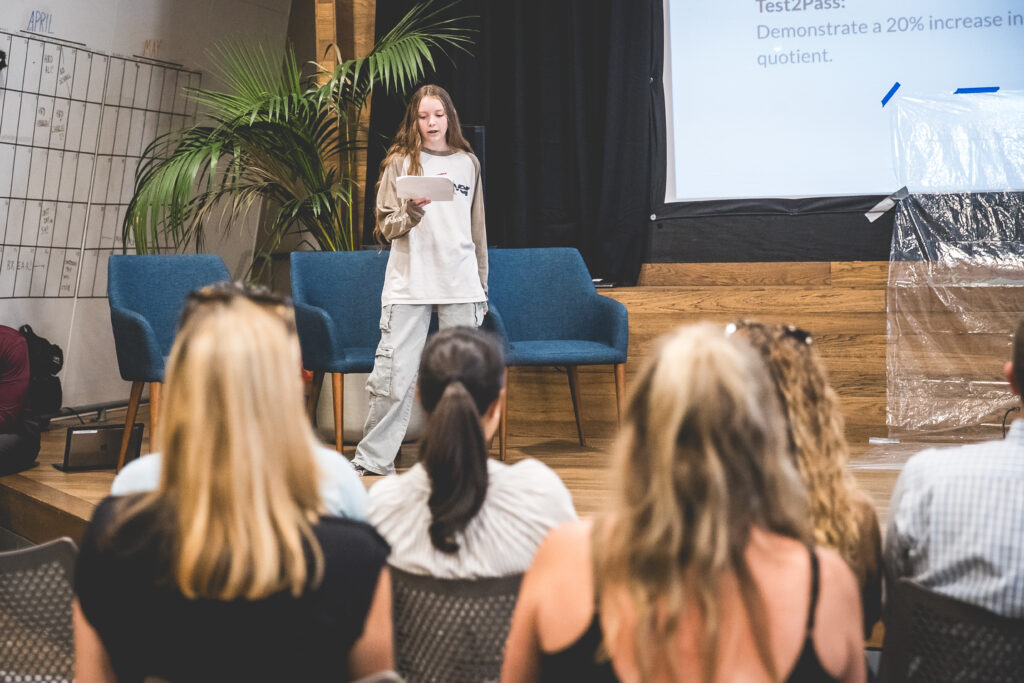
Maybe you’re seeing behaviors that concern you: A never-finished worksheet peeking out of a school backpack. Sighs, shrugs, or mumbles when you ask how school was. A tense face and slow steps out the door every weekday morning. Or maybe your kid has complained outright: “The teacher yelled at me for daydreaming, but I already know all that stuff.” “I didn’t understand the lesson. I don’t know what to do.” “I don’t want to go to school anymore.” The fact is, not every child thrives in a traditional school setting. The 2 Hour Learning model’s personalized learning approach through AI tutors and human guides (mentors) could be the alternative your child needs. The big question: how can you tell if it’s the right fit? Below are some signs that your child might thrive in a two-hour learning environment: 1. Your child finds school boring Teachers in traditional classrooms have little to no time to do anything other than stick to a standardized core curriculum. Students have limited opportunities to explore new interests or apply existing interests to their learning. If they’re lucky, they may have after school activities that they find engaging, but those activities make up a very small fraction of their time at school. In the 2 Hour Learning model, AI-powered instruction adapts to each student’s needs, keeping them engaged and motivated by presenting new challenges at just the right moment. Plus, four hours of the afternoon are devoted to enrichment activities such as sports, esports, developing life skills, etc. 2. Your child is self-motivated (or you want them to be) In traditional classrooms, every decision about a student’s learning typically falls to their teachers. Having no say in their own learning often saps students’ learning motivation. So if a student gets labeled as a ‘C’ student, they are likely to stay a C student for the rest of their academic career. In a 2 Hour Learning environment, kids are shown how to take proactive responsibility. Students take charge of their education, setting goals and pushing themselves to achieve more. That self-motivation is reinforced in the afternoon component of the 2 Hour Learning model. For example, at our flagship school, Alpha, second graders sign up for the Jingle Bells 5K Run on the very first day of school. Most of them exclaim, “That’s gonna be impossible!” But they learn to achieve the impossible one step at a time, first walking the track and then building up to running. This incremental approach helps them realize that they can indeed complete a 5K run. By breaking down the task into manageable steps, those students learn a foundational life skill: how to approach and accomplish seemingly impossible goals. 3. Your child struggles with traditional classroom environments If your child finds it difficult to sit still and listen to lectures for long periods, normal schools can be torture. At 2 Hour Learning schools, students complete core academics quickly (a couple of hours in the morning) and then spend the rest of the day in athletics or real-world skills development via projects, teamwork, and leadership experiences. For example, third and fourth graders at Alpha get to be active while developing their grit through Rubik’s Cube or juggling tournaments as well as running triathlons. Second graders develop public speaking skills through activities such as creating a schoolwide Alpha Weekly Newscast. 4. Your child learns faster (or slower) than their peers Every child learns at their own pace, but standard schools often don’t allow for much flexibility. Instead, students in a classroom move through courses at the same pace. As a result, some sit through lessons they don’t need and others find themselves rushing past concepts they haven’t mastered. Whether your child is advanced and eager to move ahead or needs more time to fully grasp concepts, the 2 Hour Learning model can meet them where they are. AI-powered instruction assesses their knowledge in real time and helps them rectify any gaps. Students can even move on to course material designed for higher grade levels whenever they show sufficient mastery. 5. You recognize the importance of learning life skills Individuals who are equipped with skills such as financial literacy, leadership, problem-solving, resilience, etc. are better positioned for life success. However, electives and afterschool activities that develop such skills typically comprise a miniscule percentage of the school day. In the 2 Hour Learning model, each afternoon is devoted to the development of real-world skills. Students start businesses, train for athletic challenges, and develop confidence in public speaking. For example, Alpha second graders have started a lemonade stand business to support a charitable cause they researched and voted on. Third and fourth graders code self-driving cars and drones and grades five through eight ran a student-led fundraising gala to earn money for traveling to Poland and training 500 Ukrainian student refugees. Questions to ask yourself as a parent If you need some help thinking through the signs discussed above, here are some questions that can help you determine if the 2 Hour Learning model is worth looking at. You can even use these questions to start a discussion with your child about their experiences at their school. Does my child seem happy or dissatisfied with school? Does my child show excitement about learning (e.g., they’re usually eager to tell me about what they’ve learned)? Is my child naturally curious and self-motivated? Have those characteristics increased or lessened over their years in school? Does my child feel supported in each class? Does my child dislike the amount of desk time required in their school? Am I looking for an education that goes beyond academics to teach real-world skills? How to learn more about the 2 Hour model The future of education is evolving, and you have more choices than ever before. If you’re looking for a smarter, more effective way for your child to learn and grow, the 2 Hour model could be exactly what they need. If 2 Hour Learning seems like
Twice the learning, twice as fast: Explaining the 2 Hour Learning model
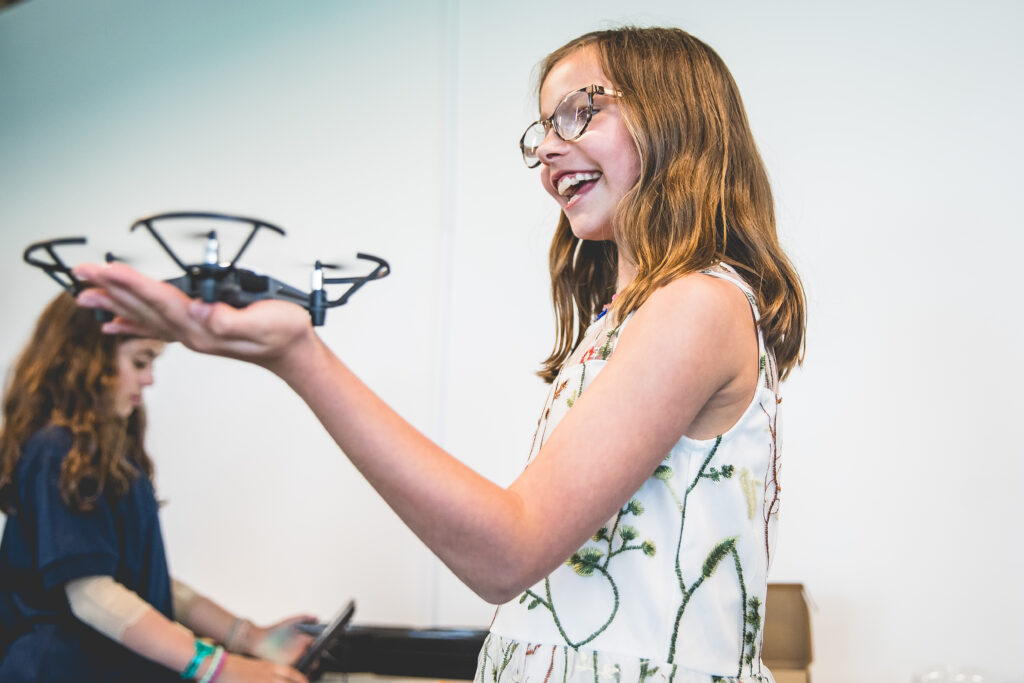
When people hear about the 2 Hour Learning model, they have a lot of questions: Can kids actually learn academics in two hours? How is that enough time? Why is it so different? The short answer to the first question is a categorical “yes.” The other questions require more-in-depth answers. Let’s answer the last question first. Why such a radically different instructional model? The 2 Hour Learning model was created because the traditional six-hour school day isn’t working. The numbers prove it. The National Assessment of Educational Progress (NAEP) measures the academic performance of fourth and eighth graders across all 50 states, Puerto Rico, and the District of Columbia. In 2024, NAEP results show that students’ math skills have not recovered from the declines caused by the 2020 pandemic. Reading skills are still declining, with 33% of eighth graders — the largest percentage ever recorded — not reading at even a basic level. That’s not to say that educators in traditional schools aren’t doing their best. But the conventional approach leaves those educators with heavy workloads that keep them from giving their students individualized support. Consequently, parents find that their children are bored, disengaged, not retaining what’s taught or just not understanding it. The 2 Hour Learning model has resolved these problems. At our flagship school, Alpha, located in Austin, Texas, students have the highest SAT scores in the state and earn 4s and 5s on Advanced Placement exams. Alpha alumni have been accepted to prestigious universities such as Stanford and Howard University. That success isn’t due to 2 hour schools attracting already academically successful students. When we opened our campus in Brownsville, Texas, children entering the second grade class averaged in the 31st percentile. In just one year, they climbed into the 84th percentile. The 2 Hour Learning model takes its name from the fact that in two hours, students learn twice as much, twice as fast. For example, a fifth grader who gains four points in math at a traditional school typically gains eight points at Alpha School. How the 2 Hour Learning model works So, how can students learn twice as much in just two hours a day? 2 Hour Learning takes advantage of the most effective form of instruction — personalized learning, particularly in the form of tutoring. The National Education Association, the largest teachers union in the United States, reports that frequent high-quality tutoring conducted one-on-one or in small groups speeds up students’ learning by three to 15 months. Previously, one-on-one tutoring had been too expensive for anyone but the wealthy. Our learning model levels the playing field through the use of AI tutors, with human educators serving as mentors or “guides.” In the 2 Hour Learning model, students spend weekday mornings working on personalized, AI-led lessons. The AI identifies gaps in each child’s knowledge of the core subjects — math, reading, science, and social science — in real time. That means students can address misconceptions and gaps right away. This process starts as early as kindergarten and first grade. At our flagship Alpha school, young learners spend those two hours in the morning in lessons that may involve preparing a presentation about their favorite dinosaur, mastering 600 sight words, or gaining math fluency. And no matter where they are academically when they come to us, those students are in the top 1% in the country by the time they leave first grade. If students ever need extra help understanding a concept, the human guides are available for “coaching calls.” In addition, guides reinforce the “personal” aspect of the personalized learning experience by building relationships with students. They get to know what motivates each student, where each student needs the most help, and how to unlock that student’s potential. Academics only make up the morning component of children’s learning day. Four hours of the afternoon are spent on athletics and physical fitness, entrepreneurship programs, financial literacy, public speaking training, social skills training, and community engagement. Let’s take the example of kindergarteners and first graders once more. Those students spend their afternoons taking on challenges such as learning to swim or tie their own shoes, doing a 100-piece puzzle or participating in a five-mile bike race. Getting kids to achieve these things helps them realize that there are no limits to what they can do. And it’s not just what they can do alone. Those youngsters participate in a workshop called “Better Together” where they learn how to play games fairly, not cry when they lose or quit in the middle, and encourage and cheer their classmates on. The workshop builds a foundation for self-confidence and self-directed learning that sets those students up for success. Activities vary from campus to campus, but examples for older students include: Launching a food truck business Managing an Airbnb Creating newscasts Training for 5K races Organizing fundraising and using the money to travel to Poland and teach 500 Ukrainian refugees The premise is the same across all campuses for every age: When kids engage in real-world situations, they develop confidence, independence, resilience, creativity, and problem-solving capabilities. Key benefits of the 2 Hour model One of the biggest benefits of the 2 Hour Learning model is happier, more engaged learners. One example is Grace Price, a graduate from Alpha High in Austin, Texas. “Compared to most students, I’ve a very positive outlook on school because of the school that I attended, which is Alpha,” she said. “But before that, I definitely was not the biggest fan.” Before attending Alpha, Grace went to an Austin public school. “It was not the best for me,” she recalled. When she first toured the flagship school, Alpha, Grace was halfway through fifth grade, and her parents assumed that she’d want to remain where she was until the year because of her friends. Instead, Grace insisted on transferring to Alpha immediately “I put my foot down,” she laughed. Bryon (surname withheld to protect his privacy) is an 11-year-old student who enrolled in the flagship Alpha
“I turned out fine” is horrible rationale for education

Just because your education was exceptionally average doesn’t mean your kids’ has to be. “I went to traditional school and I turned out fine” is perhaps the most ludicrous defense that exists for education, and I’ll tell you why. “Fine” is the pasta primavera you’ll never order again. “Fine” is the lukewarm compliment from your husband that sends you racing back to your closet to change your outfit. In all other areas of life, “fine” is not good enough. But for whatever reason, “fine” is the apex of our educational expectations. I myself am a product of public school education (and yes, look, I turned out fine!), but that doesn’t mean I can’t ask questions, can’t raise my expectations. That’s why I’m writing to you today. To raise your expectations. Because “fine” is not the summit. It is the unremarkable plateau where we’ve set up camp and have forgotten there is an entire mountain left to climb. Just because something is normal doesn’t mean it’s optimal First, a question: why do we defend systems we know to be flawed? Simple. Because we grew up inside them. This is what cognitive scientist Dan Lortie calls the “apprenticeship of observation.” Thousands of hours spent in a classroom, absorbing the squeak of an expo marker, the clamor of lockers, the fluorescent glare of buzzing overhead lights. These experiences taught us more than just algebra or grammar — they taught us what school looks like, what education itself is meant to embody. But just because something is normal doesn’t mean it’s optimal. For example, homework. Believe it or not, homework is not an essential part of education — understanding a concept is. Homework is simply one mechanism to help students understand a concept. The tool, not the essence, if you will. But because homework was embedded so deeply into our school experience, we believe it to be an indispensable part of education. This is the trap of the familiar: believing what’s normal is what’s best. And that, my friends, simply isn’t true. Students at Alpha don’t do hours of homework each day. Why? They spend their afternoons applying what they’ve learned in real-time. It makes the knowledge stick better than a worksheet ever could. See? There are countless mechanisms to success. Aren’t you curious to know them? The mythology of school The tricky thing about school is that it’s not just a system, it’s a mythology. Think of all the movies that act as educational lore in American culture: The Breakfast Club, Mean Girls, Ferris Bueller’s Day Off, Dead Poets Society. Myths, as we know, are sticky. They cling to us, not because they are accurate, but because they are nostalgic and evocative. If I close my eyes right now, I can smell the hallways of my childhood — some strange concoction of lemon cleaning solution and sweaty gym shoes. I can hear the shrill squeal of the whistle at P.E., feel the splintery ridges beneath my desk where another student carved their name into the wood — permanent proof that TYLER WAS HERE. These are not memories of an efficient system. They are simply the relics of growing up. Beautiful relics, maybe. But mile-markers of a high-quality education? Certainly not. Maybe you feel pride in having “overcome the system.” I know I do. That doesn’t mean our kids have to endure the same struggles. Why do we enroll kids into a system we know they’ll have to overcome? Why not seek out a system that works with them, instead of against them? It’s a valid question that very few of us ask. Nostalgia is a powerful force, but it tends to romanticize the past. Education isn’t a rite of passage or a test of resilience. It is not trauma-bonding lore like the movies say. It is a tool to unlock our kids’ potential. And it’s time to start trying. The past is not a blueprint for the future. It is a culmination of valuable lessons — but what is a lesson worth if we don’t learn from it? I’ll let you answer that one. Status Quo Bias Nobel laureate Daniel Kahneman has a name for our extraordinary bias to the familiar: “status quo bias.” It’s when we associate what we know with what (we think) is safe. Basically: “if I know something, it can’t hurt me.” The unknown is where things get dicey. Because of status quo bias, conventional schools possess a kind of default legitimacy. They’re assumed to be better because they’re widely used, and they’re widely used because they’re assumed to be better. Alternative options — like mastery-based learning — are viewed as “experimental,” despite the piles of research that suggest otherwise. I know what you’re thinking: So, what? Parents are clinging to familiar schooling options for their kids. What’s the issue? There are far worse things happening in the world, right? Here’s the irony: the system that feels the safest — because it is known — may actually be the most dangerous — because it is known. Factory-style education does not adapt. It does not innovate. It simply persists. And in its persistence, it stagnates. If conventional schools guarantee stagnation, and the world around us guarantees growth, then this guarantees our kids will be left behind. Clinging to “safe” out of fear of failure actually increases the risk of failure for our kids. Unless. Trying to succeed is far more effective than trying not to fail You spent over a decade in classrooms. Years of your life. Should the result of that time be “fine”? Shouldn’t it be exceptional? Shouldn’t it be transformative? This isn’t an essay about despair, but an exciting call-to-action, an invitation for you to think differently, to expect more, to get curious about what the view looks like from the mountaintop rather than the valley. It’s okay to want more for our kids. We should want more for our kids. But to do that, we must first break free from the patterns and habits we follow that we don’t even understand why. That’s exactly why we do what we do at Alpha School, GT School, Next Gen Academy, Texas Sports Academy, and all the other schools that
Personalized learning doesn’t just raise the floor, it explodes the ceiling
And it’s more accessible than ever before. It’s 1847 in the maternity ward of Vienna General Hospital, where childbirth mortality rates are scary high — that is, until one physician named Ignaz Semmelweis makes a discovery that changes everything. He notices that one maternity ward, staffed by midwives, has significantly lower death rates than the ward run by professional doctors. So, he casts off all notions of the prevailing medical dogma of the time and instead, directs his full attention towards this single maternity ward. His discovery? Medical students were moving directly from performing autopsies to delivering babies — without washing their hands. The fix was simple. Wash your hands before treating every single patient. No exceptions. Just like that, mortality rates dropped almost 20%. And yes, this relates to education more than you think. Personalized attention begets transformative outcomes. One-on-one education has always been the most potent form of learning. Did you know that aristocrats refused to travel without their personal tutors? There is even a distinct connection between one-on-one tutoring and the creation of genius: Einstein had Max Talmud, Virginia Woolf had Janet Case, Mozart had his father — the list goes on. But somewhere along the way, we’ve lost the thread. Tutoring became an after-school program replete with SAT prep questions and bored kids perpetually eyeing the clock on the wall. I’d even venture to say that tutoring is now a negative thing. It’s an embarrassed confession, an admission of failure. “I have a tutor” is shorthand for “I’m not good enough.” How did we let this happen? The truth is, personalized learning works. It’s why we fall back on tutoring when classrooms fail. And it’s more than just intuition; it’s science. Educational psychologist Benjamin Bloom proved this decades ago in 1984 with his famous 2 Sigma Problem: students who received one-on-one tutoring performed two standard deviations better than their peers in conventional classrooms, outperforming 98% of their classmates. Two sigma! Twice as effective! graph from Learner Personalized education doubles learning efficacy for kids; and it’s been every educator’s dream to implement this everywhere for the last 200 years. But there’s been very little we could do about it. Most families can’t afford to pay for a tutor (much less their air fare), and it’s impossible to provide entire classrooms with a personalized curriculum. And even if that was possible, we’d be scraping the bottom of the barrel trying to find 1) skilled-enough tutors, and 2) enough skilled-enough tutors. This is why Bloom’s 2 Sigma Problem is just that: a problem. Individualized education, while ideal, has never been feasible. Until now. AI makes personalized education for every kid possible Did you know that AI tutors are now more effective than Harvard professors? Not only do Harvard students learn more than twice as much with AI, they learn in less time with more motivation. You wouldn’t think it’s possible, but it is. And that’s just the beginning. Let’s look at some more numbers. On average, personalized education leads to: Read the full article here
How AI will transform education, from PreK to PhD
There has never been a better time to be five years old. I often get asked this question: “If AI knows everything, why should my kids learn anything at all? Isn’t education obsolete?” My answer is visceral and immediate: No, education will never be obsolete. It’s actually more important than ever. But it does need to adapt. Massively. A few times per century, some new technological invention drops from the sky and uproots life as we know it. Whether we like it or not, we’re thrust into a “new normal,” one that significantly disrupts the pattern of our daily lives. People once thought the Industrial Revolution was the end of the world. And in some ways, it felt like it. People were scared, uncertain, powerless. Thousands of jobs were lost. But in the long-term, hundreds of thousands of jobs were created. Now, for you and me, everyday tasks are glossed with an ease and convenience that previous generations could have never dreamed of. All we had to do was adapt. We did it again with the Internet. And again, with the iPhone. And we will do it again with AI. Because beneath newfangled gadgets and innovations and movements, the human spirit throbs like a persistent pulse. We fear, endure, adapt, innovate, create, then marvel at what we’ve done and how far we’ve come. Eventually, we look back and say, “How did we ever manage without this thing?” And the cycle repeats itself. The first 20 years of a person’s life no longer look anything like the experience of earlier generations. That may sound scary, but I promise you: there has never been a better time to be five years old. The five phases of education (as we know it) Let’s start with a quick look at how education works without AI. Learning happens in five phases: Pre-K to 3rd GradeKids set the foundation of their education. They learn the basics: letters, numbers, how to read and write. There’s a popular adage: “Until 3rd grade, kids learn to read. After 3rd grade, they read to learn.” 4th Grade to 12th GradeThese years are all about mastering a standardized curriculum. In the U.S., that’s Common Core and AP courses. The goal is to stuff kids’ heads with as much knowledge as possible. CollegeStudents begin to learn from seasoned experts. College classes are less about standardized test scores and more about domain expertise. For the first time, students can break away from generalized curriculum and dive deep into niche pockets of education: gothic literature, applied mathematics, biochemistry, the history of ancient Mayan civilization — you name it. Master’s ProgramsNow, students shift to becoming experts themselves. “School subjects” become “career goals.” Students are no longer concerned with pure consumption of knowledge, but the long-term execution and creation of it. PhD ProgramsFinally, the PhD shifts from mastering knowledge to creating it. Students officially break their “student” mold and step into the role of “inventor,” “creator,” and “industry expert.” As you know, this is an arduous, expensive formula that can span the length of decades. Certain things must happen to elicit certain outcomes. Creation requires mastery. You can’t expand a frontier if you don’t know the existing frontier like the back of your hand. The human knowledge graph is an intricate web of successes and failures, from caffeine-fueled all-nighters to heated debates with professors to actually being in the field, boots on the ground, testing, trying, experimenting, hypothesizing. Knowledge is the result of generations standing on the shoulders of giants. Example of a knowledge graph in the realm of philosophy And now, a new giant (albeit, artificial) has entered the scene. And it will significantly change learning as we know it. Sacrificing learning in the name of AI isn’t just defeatist, it’s destructive You and I both know that education isn’t just about learning or thinking; it’s about learning how to learn, thinking about how to think. Throwing up our hands and saying, “Well, there’s no point in learning if AI can do it all!” is a destructive mindset. It’s the path to unlocking “scary AI” — the kind of existential threat that takes over the world because we have allowed technology to use us and not the other way around. What most of us are not seeing is this: AI can help our kids accomplish things no generation before them has ever been able to do. It will fill their minds with more knowledge than ever before, faster than ever before. It will enable their minds to be the most interesting places in the world. Can you imagine? If your kids’ own ideas were more exciting than the brain rot of TikTok or the addictive slop of video games? A few years ago, AI couldn’t beat a third grader in a math test. Now it can beat most Master’s students. AIs today are on track to become experts in every single academic field. What AI cannot do is create new knowledge at the capability level of humans, especially in fields where it doesn’t have gigabytes of training data. And this is where humans can thrive. Four ways AI will transform education Our idea of education is this: twenty-five students, one teacher, everyone learning the same thing at the same pace at the same time. Some kids are bored and drooling, others are frustrated and struggling, and teachers are oversaturated with responsibility. Bell rings. Class dismissed. These days will soon be over. Here are the four integral ways AI will transform education. Personalized Learning for Every Kid AI tailors education to every child’s passions and interests. Essentially, every kid will have their own personal tutor throughout the entirety of their education. Students will master the same concepts, just in different ways. Here’s a good visual: imagine you and I are peering up at a stained glass window, one of those beautiful vintage ones you often find in old Southern churches. The sun is beating down and the glass is filtering it into a myriad of different colors: blue, purple, yellow, green. Depending on where you’re looking, or what color catches your eye, you’ll be gazing up at a different version
Why traditional school is broken (and how we’re fixing it)
Our education manifesto. The greatest untapped resource on the planet isn’t nuclear energy or deep-sea minerals, genetic engineering or outer space exploration; it’s human potential. And what human has more potential than a child? You’d think we’d pour our best effort into educating them, exhausting all possible options. But we don’t. Most parents know more about the difference between the oat milk from Trader Joe’s and the oat milk from Whole Foods than they know about their own kids’ education. (Not an insult, just a fact.) And it’s why I’m writing to you today. To be clear, I don’t enjoy harping on the fact that conventional education is broken. There are too many rage-baiters and doomsdayers out there: “public school sucks!” or “save your kid from public school while you still can!” I am not one of them. That’s coming at the problem from the wrong angle. Parents shouldn’t have to ask, “What’s wrong with my kids’ school?” They should be asking, excitedly, “How good can my kids’ school really get? How high is high?” But to answer that, we have to first understand where we are. And to be honest, it’s not pretty. My goal is to give you the unvarnished truth of our education system as a whole, so you can start building your own opinion and making the best possible decision for your family. Let’s start from the beginning. 400 BCE: The golden age of personalized education For over 1,000 years, education was a deeply personalized experience. It was the golden age of tutors: Socrates tutored Plato, who tutored Aristotle, who tutored Alexander the Great. You get the picture. The problem was, only the wealthy could afford high-quality tutors. Personalized learning may have been the pinnacle of education, but it was far from accessible. Naturally, alternative solutions were born. Read the full article here
The six-hour school day is dead. Luckily, there’s an even better solution.

Welcome to two-hour learning, where kids learn twice as much, twice as fast. It’s true — kids can crush academics in just two hours a day. And by “crush,” I mean, climb their way to the top 1% of the nation. This isn’t hyperbole. It’s happening right now in the halls of our flagship school, Alpha. And your kids could be next. To ease the swell of panic that probably just rose in your throat — “you mean the newest, most successful form of education includes kids coming home after just two hours of school!?” — you should know that the “two hour” model only applies to hard and fast academics. (Yes. Take a breath. All is well.) It works like this: Mornings are for academics. Kids spend two hours immersed in deep, focused learning with traditional academia: math, reading, science, history. Afternoons are for life skills. Kids spend four hours participating in workshops that simulate real-world skills: public-speaking, entrepreneurship, creative writing, financial literacy. Kids aren’t built to sit butt-in-chair for six hours a day. Intuitively, we know this. They need movement and conversation, things to build and challenges to overcome. It’s frustrating enough for adults to be tethered to their desk all day. Why subject kids to the same fate? Why not fill their afternoons with activities that inspire them, that show them how the world actually works? Say, launching a food truck business, or writing a Broadway musical, rather than nodding off during post-lunch afternoon algebra. Kids are far more capable than we give them credit for, and the six hour school day keeps them shackled in these chains of unbelief. The two-hour learning model, however, gives kids precisely what they need — legitimate academia and real-world experience — precisely how they need it — action over absorption. Read the full article here
How AI And Humans Will Transform The Current Education System
Few things are more important than education. Unfortunately, the U.S. education system has been under siege for years, with understaffed schools, overcrowded classrooms and overworked, underpaid teachers. The government’s own NAEP issued a Nation’s Report Card revealing less than a third of U.S. eighth graders can do grade-level math. I believe we can no longer accept a system that’s failing so many of our students. The greatest problem stems from the fact we’re still applying a rigid, century-old education model to the challenges of our modern world. Today’s teachers hold the impossible job of educating 20, 30 or even 40 students in a classroom, kids from vastly different backgrounds and aptitudes—with no time to focus on personalized learning. Read the full article here
Is There Such A Thing As ‘Good Screen Time?’

Young people are spending more time on digital devices than ever before. Nearly every teenager in the country now has access to a smartphone (95%). About half of them report being online “almost constantly,” a 24% increase from a decade ago, according to 2024 Pew Research Center data. The alarm bells are sounding. Bestselling books warn parents about the extreme risks of screen time on developing minds, such as The Anxious Generation by social psychologist Jonathan Haidt, who points out that parents are “overprotecting children in the real world and underprotecting them online.” Research suggests a more thoughtful approach is needed. Focusing On Quality Over Quantity Recent research paints a more detailed picture of screen time’s impact. According to a Wall Street Journal analysis, time spent on school-issued devices peaks in sixth grade at 35% of instructional time, and from first to 12th grade, students spend 20% of their average instructional day on devices. Rather than focusing solely on reduction, we should emphasize how technology is used. Some teachers are finding innovative ways to use technology that enhances learning—from interactive quizzes and creative writing exercises to virtual global exploration and collaborative projects. These transform traditional assignments into engaging multimedia experiences where students create, rather than just consume, content. In the tech-driven schools I founded, “good screen time” is fundamental to how students learn. Our education model uses adaptive AI for personalized lessons for every student but limits device time to two hours daily on our edtech platforms. The remaining day focuses on hands-on learning and collaborative projects, recognizing that technology should enhance, not replace, traditional education. Read the full article here